The Best Open-source E-Commerce Platforms in 2023
Posted August 8, 2023

Online presence is now crucial if you want your business to stay competitive, and there are many options to consider in weighing the type of e-commerce solution for your organization, whether they be open-source, Software-as-Service (SaaS), or DIY e-commerce platforms. With an open-source e-commerce software solution, the business gets full access to the source code and can configure it to match their specific business requirements. The business owner is in charge of installing the system on their own server, configuring hosting, and managing all technologies, security, data, and the website’s general operation. SaaS providers operate on a subscription basis and work to secure, maintain, and host a business’s e-commerce site on the provider’s own servers. For e-commerce business owners who don’t want to spend time, energy, or resources on maintenance, SaaS systems are an excellent solution.
Finally, with DIY e-commerce, a company hires developers to create unique solutions to fit business objectives and processes. Businesses generally choose DIY e-commerce because their business model or operations necessitate complete control over their application, technology stack, and implementation.
This article will provide an open-source e-commerce software comparison. If you’re a developer considering making a change in your e-commerce platform of choice, this is a great place to start exploring what other options exist.
The Best Open-source E-Commerce Platforms
E-commerce platforms enable online retailers to manage their business, sales, marketing, and other operations. E-commerce stores reach a global market, giving your business a huge increase to both audience and sales.
However, running an online store is complex. It involves many processes such as creating a website, managing stocks, accepting orders, processing payments, handling shipping and logistics, and providing customer service. Here are some factors to consider in choosing an e-commerce platform for your online business::
-
Simplicity: The e-commerce website should be user-friendly. Many users with a non-technical background will visit your site, and they should be able to navigate it with ease.
-
Language support: More and more people rely on online shopping globally, making it vital to have a multilingual feature to translate your e-commerce website’s content into different languages.
-
Vendor and payment option flexibility: It’s equally important to make sure that your consumers have a variety of payment choices to satisfy their various needs.
-
Customizability: E-commerce platforms offer many designs and themes. The ability to customize your site helps you satisfy your customers’ unique preferences.
Now, let’s take a look at comparing some of the best open-source e-commerce platforms.
Shopware
Shopware is an open-source e-commerce platform from Germany. It comes with many capabilities and features to match your business requirements and it uses a versatile API strategy to accommodate a variety of e-commerce advancements. Here is Luxury watches and jewelery in the online shop built with Shopware:

Shopware is simple to use. Its control panel is straightforward and intuitive, allowing you to grasp all of its features in no time thanks to the clarity of its menus and the superb organization of the numerous capabilities it offers. It also supports multiple languages through the Shopware Language Pack, an extension that offers more than 25 languages.
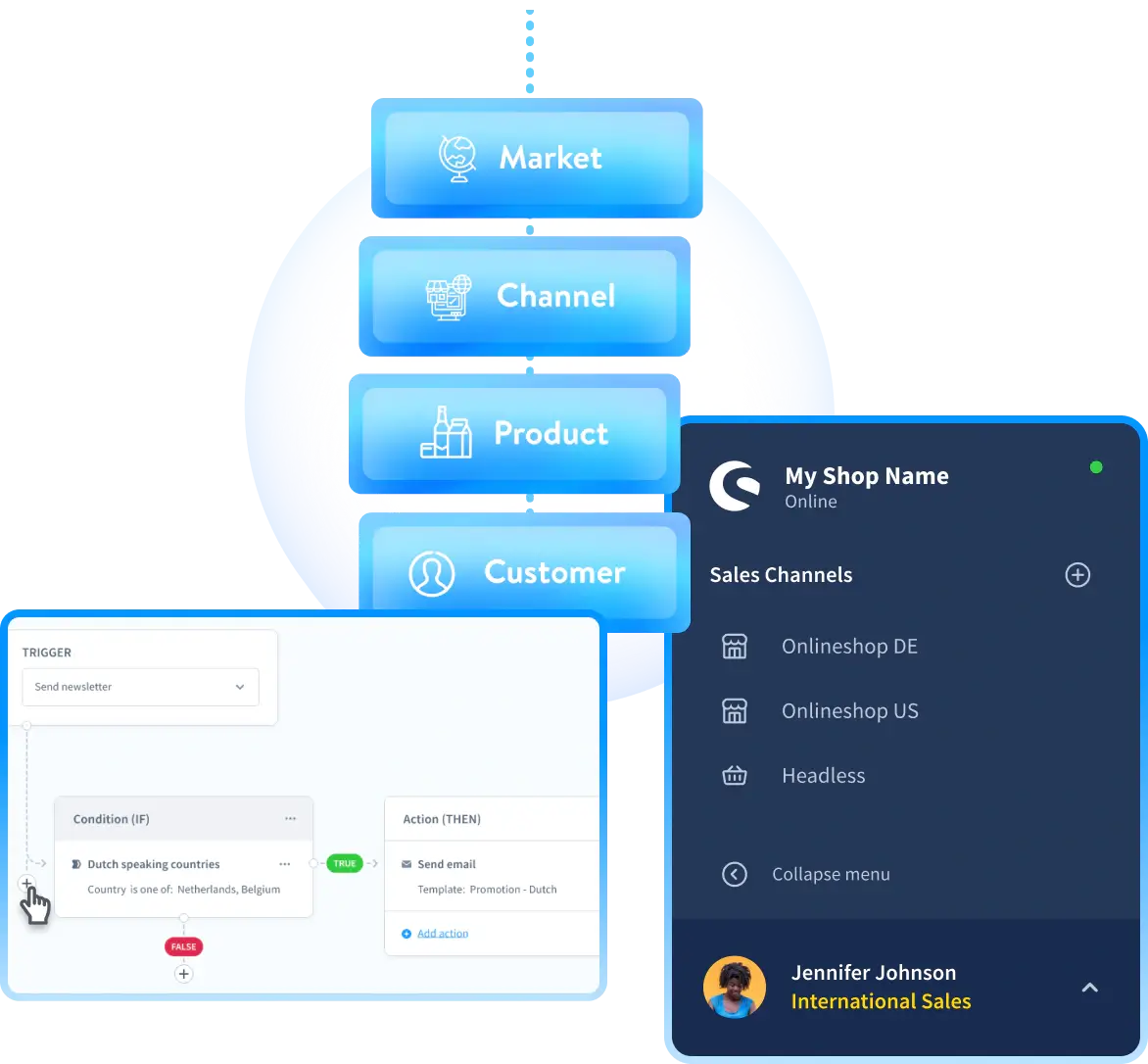
Shopware has a high level of vendor and payment flexibility. It supports a multi-vendor marketplace, allowing customers to sell their own products. It also supports different payment options with the help of extensions. Shopware is a comprehensive solution that allows you to take your online store to the next level by providing a global overview of sales to customers. It’s also highly customizable, allowing you to tailor the platform to the specific needs and standards of your unique industry.
CubeCart
CubeCart is an open-source e-commerce platform that is feature-rich. CubeCart pages are created using templates that make it easy for developers and third-party providers to create custom designs for their pages. It offers order history, sales reporting and analytics, email marketing, administrative panel, email and print invoicing, and more.
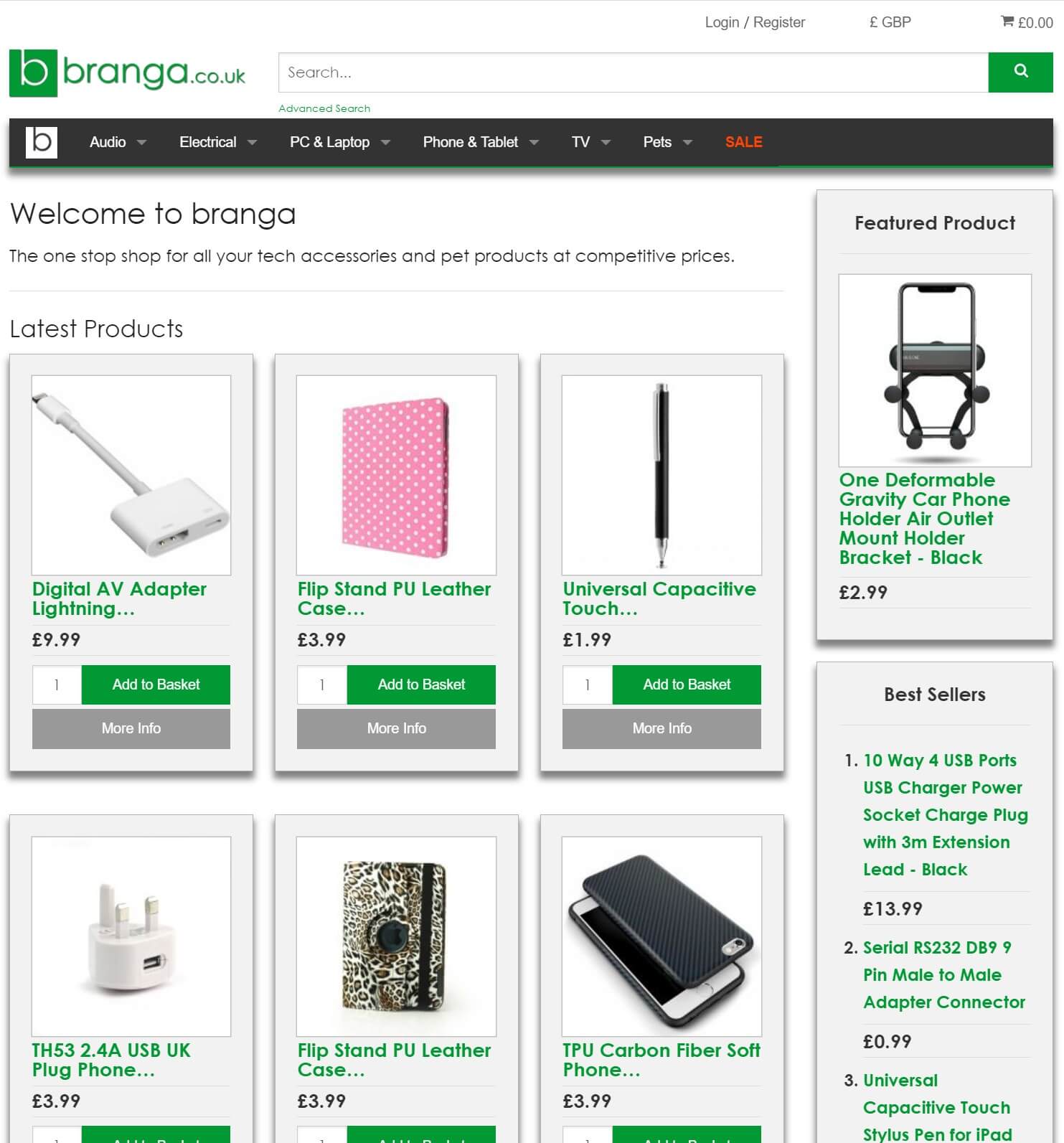
CubeCart has a straightforward, user-friendly interface that can be easily understood and used. It supports several different languages to suit a global audience with the help of various extensions available on a free or premium basis. Plus, it’s customizable for users to give their customers a branded experience through the use of many themes and extensions available.
CubeCart supports multiple payment methods such as PayPal Commerce, Adyen, Bank Transfer, and more. The software imports the payment options directly to the website by navigating to extensions and payment gateways. However, CubeCart does not support multi-vendor functionality.
Sylius
Sylius is an open-source e-commerce platform built on the Symfony framework. It’s made up of decoupled components that may be utilized in any PHP application, even if it’s not Symfony-based.
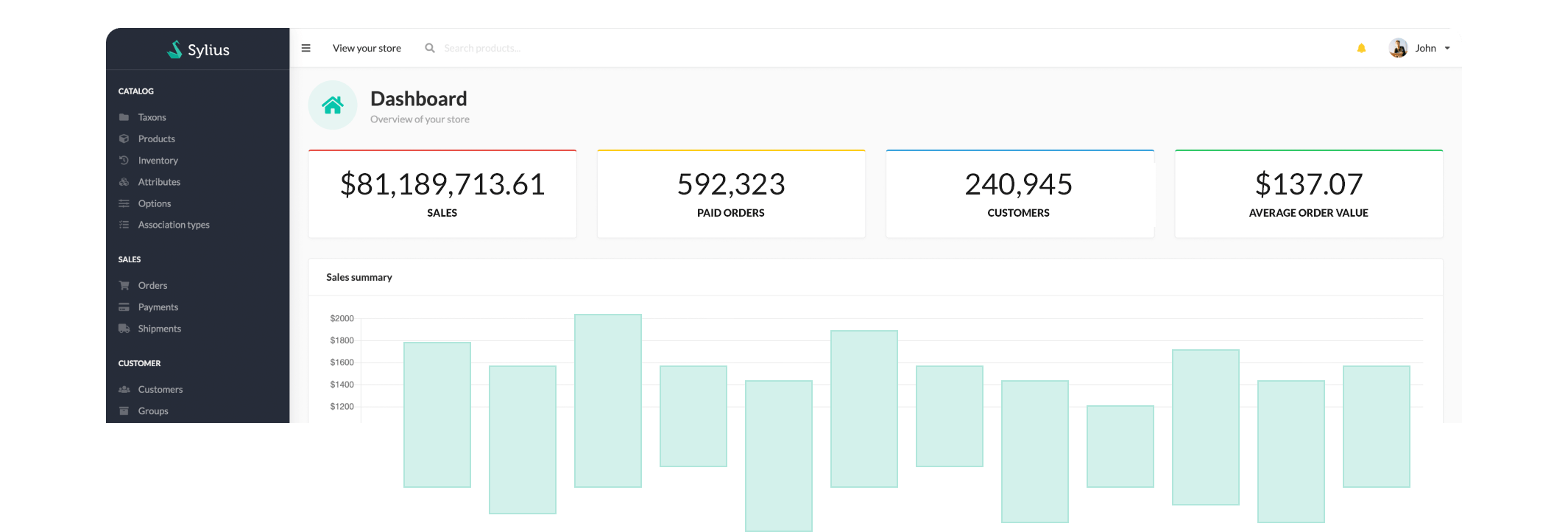
Sylius’s technology is simple to use, and it makes extensive use of excellent coding techniques. It’s well-suited for middle-market organizations due to its basic yet powerful nature.
Sylius uses Locales—language codes standardized through the ISO 15897—to support multiple languages. It also brings about vendor and payment flexibility using plugins such as the Sylius Vendor Plugin, which converts the online store into a marketplace, allowing vendors to sell their products on e-commerce websites like eBay and Amazon.
Sylius supports many payment channels and is integrated with payment methods such as PayPal, Credit cards, ApplePay, and more. Finally, Sylius users can customize every aspect of this platform due to its well-thought-out and modern architecture and the use of the Symfony framework.
WooCommerce
WooCommerce is a WordPress-based open-source e-commerce platform that seamlessly translates your WordPress site into a fully functional e-commerce store. It is designed for small to large-sized businesses as it is powerful, flexible, and supported by a global community.
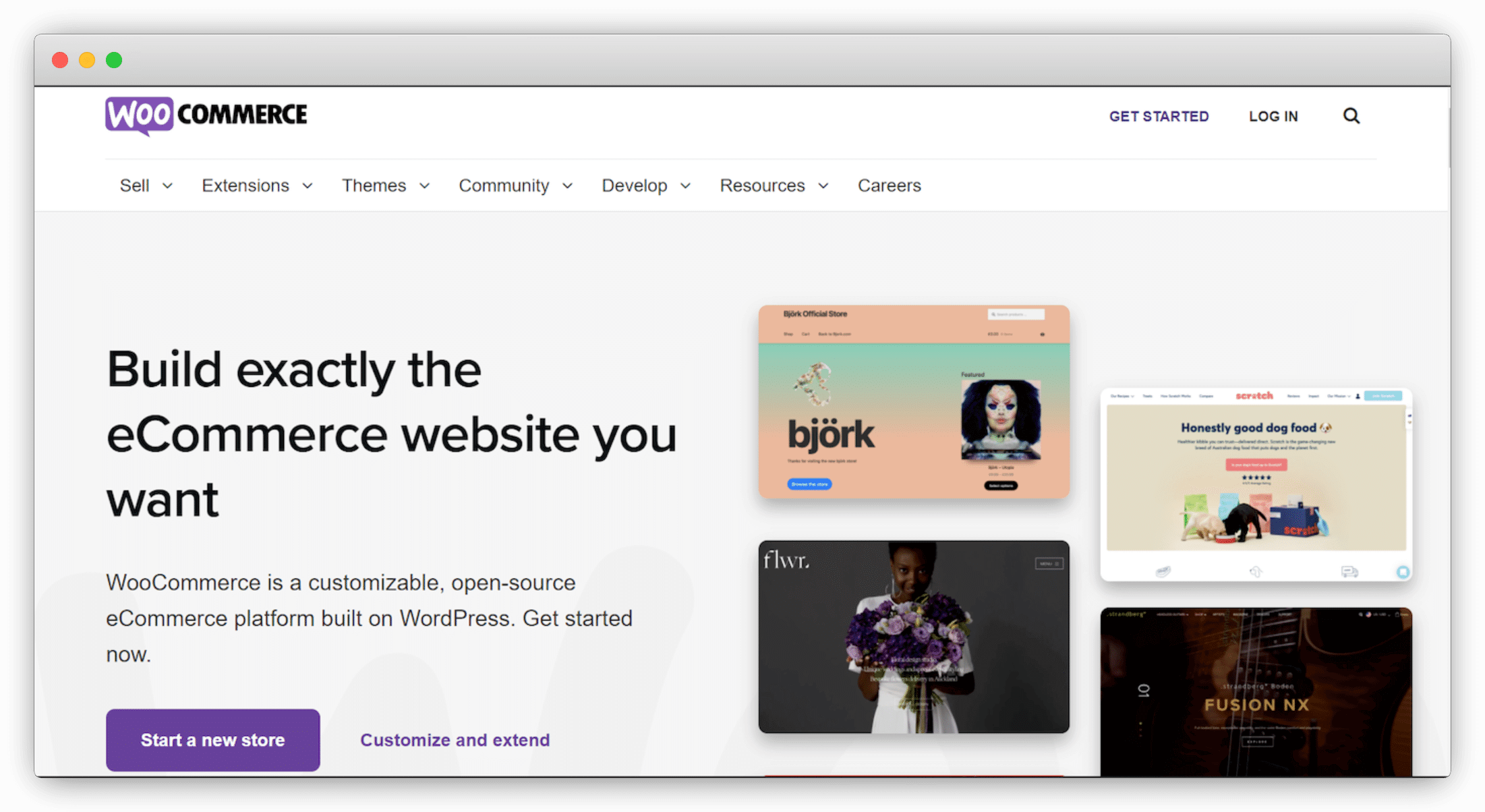
WooCommerce is simple to install, set up, and integrate with the WordPress theme. It is straightforward and offers many tools and plugins to help merchants grow their business and customize their sites with no coding knowledge necessary.
For language support, WooCommerce offers multilingual plugins such as MultilingualPress, TranslatePress, and others.
For vendor and payment flexibility, WooCommerce uses plugins such as Multi-vendor marketplace to create a shared shop for several businesses while granting full product control to each individual vendor. Furthermore, each seller using WooCommerce has access to multiple payment gateways with the help of a plugins like WooCommerce Multiple Payment Gateways (WCMPG), which integrates various payment methods on the e-commerce site, such as PayPal and direct bank transfers.
OpenCart
OpenCart is a PHP-based open-source e-commerce platform for online merchants that is designed to be feature-rich and user-friendly with a wide range of capabilities. It’s easy to operate, offering a convenient dashboard and simple menus, and provides multi-store functionality, support for multiple languages, and numerous payment options.
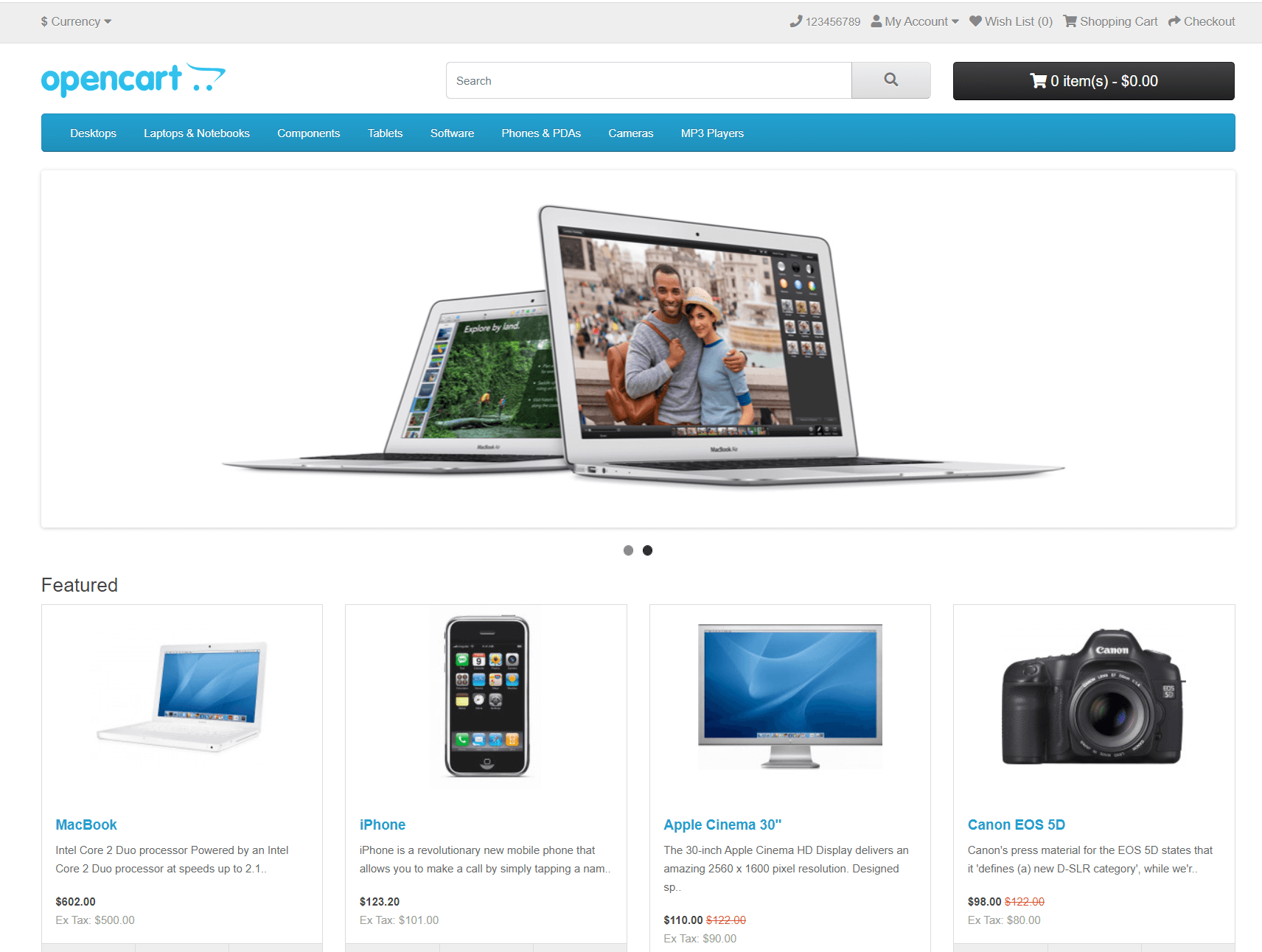
With the help of OpenCart Multi Vendor Marketplace, an extension that supports multiple stores and sellers, OpenCart enables vendor flexibility. It also offers payment flexibility with the help of extensions like Partial.ly, which seamlessly integrates and automates payment methods.
OpenCart is mainly based on PHP and MySQL. Therefore, users with knowledge of PHP and MySQL can easily develop extensions and customize the store.
Magento
Magento is an open-source e-commerce platform written in PHP. It offers powerful and flexible inventory management, product management, and category management features.
Magento has a user-friendly dashboard. It makes it easy for new users to understand and for administrators to execute duties all-around, such as managing orders, accessing reports, managing payments, sorting consumers, marketing products, and managing the back-end of the store. In addition to its essential built-in capabilities, ot offers multiple add-on extensions to enhance customization.
Magento has a store view feature that creates multiple store views in different languages thanks to the Magento 2 multi-language functionality.
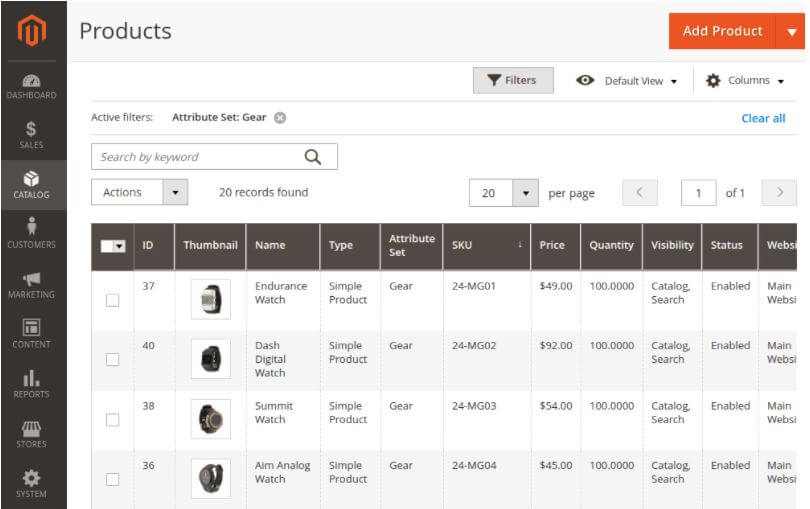
Magento enhances vendor and payment flexibility with the aid of extensions such as Magento Marketplace, which supports multiple sellers in an online store. The Magento 2 Credit Line Extension is a versatile payment option that extension enables payments via PayPal, Stripe, 2Checkout, and more.
PrestaShop
Prestashop is a feature-rich open-source e-commerce solution that can be scaled up or down to meet the needs of huge corporations or small organizations.
Setting up PrestaShop can be an involved process, requiring time and technical expertise from the user. For instance, users need to download the software, create a database, upload the software to their server using an FTP client, and then install it. To get started with PrestaShop, users can follow this guide or get PrestaShop training.
This beautiful Magimix ecommerce is built with PrestaShop platform.
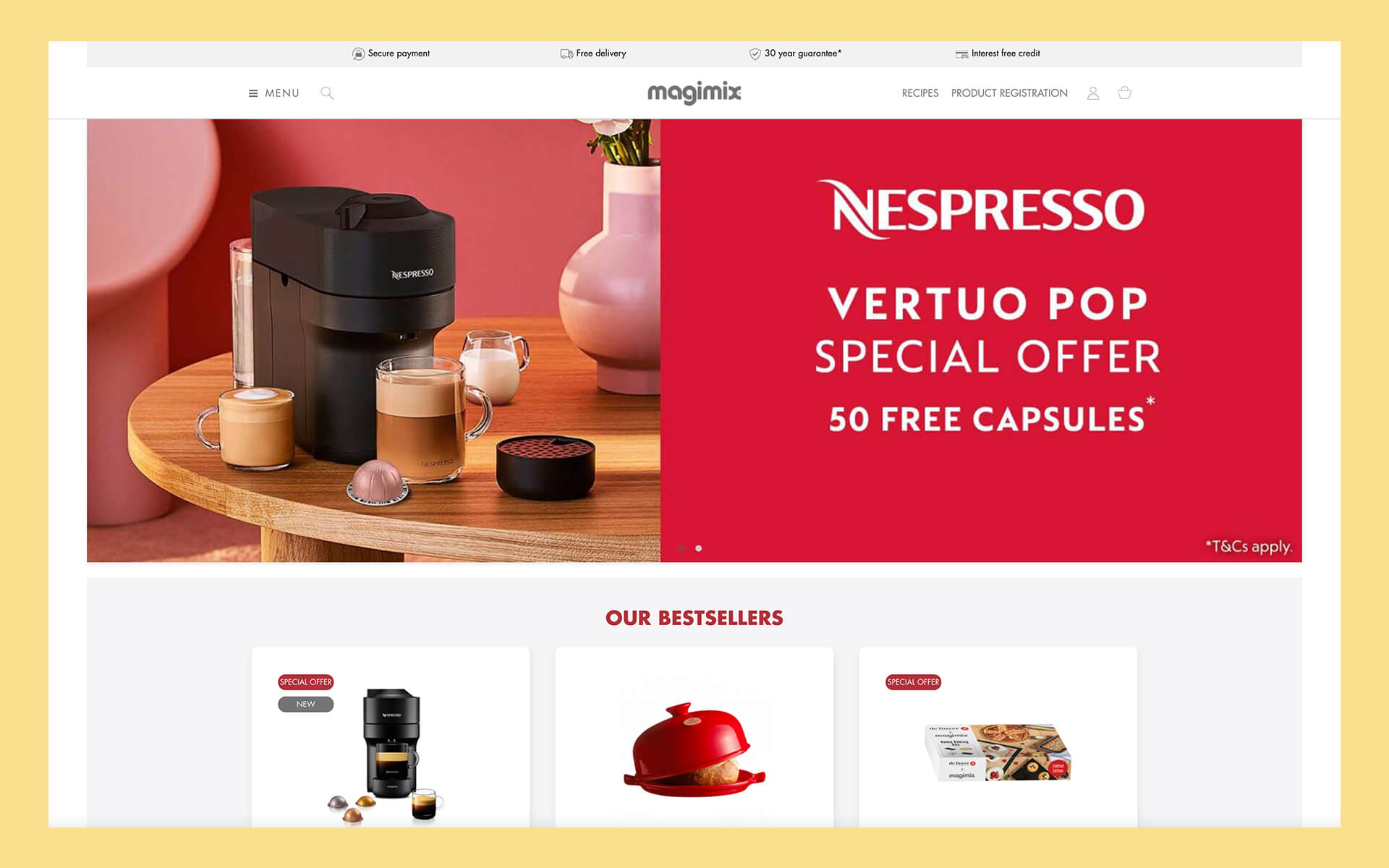
PrestaShop can translate a store into multiple languages automatically based on a visitor’s IP address. For merchants targeting global markets, PrestaShop is an excellent solution that has the functionality to accept numerous currencies and payment methods.
PrestaShop does not support multiple vendors on its own, but using add-ons like the Agile Multiple Seller/Vendor Module, merchants can quickly turn PrestaShop into a multiple vendor marketplace.
PrestaShop is highly customizable, allowing its users to modify practically every aspect of their online stores.
Conclusion
In the 21st century, the internet has dominated the world and many businesses are being predominantly conducted online. With the help of e-commerce platforms, you can sell and buy products online with ease.
This article introduced you to some of the best free e-commerce software options available today and equipped you with the information you need to make an informed decision as to which tools may be ideal for your own business.
With the newfound list, why not dive deeper and learn The Best Open-source OMS Softwares in 2023? Or get more more outlandish in this Best Open-Source Free PIM Softwares In 2023 guide.

Written By:
Joseph Chege
More Related Articles:
-

The Best Open-Source Free CMS Systems In 2023
A Headless CMS is a back-end Content Management System (CMS) where the content repository (body) is separated from the head (front-end). Its focus is
Aug 8, 2023
-

The Best Open-Source Free PIM Softwares In 2023
Product Information Management (PIM) is a software that gathers and manages all your product information in a central place, allowing you to optimize
Aug 8, 2023
-

The Best Open-source OMS Softwares in 2023
An Order Management System (OMS) centralizes and automates order processing from all sales channels. OMS manages the entire supply chain as a
Aug 8, 2023